
How an elevator keeps working
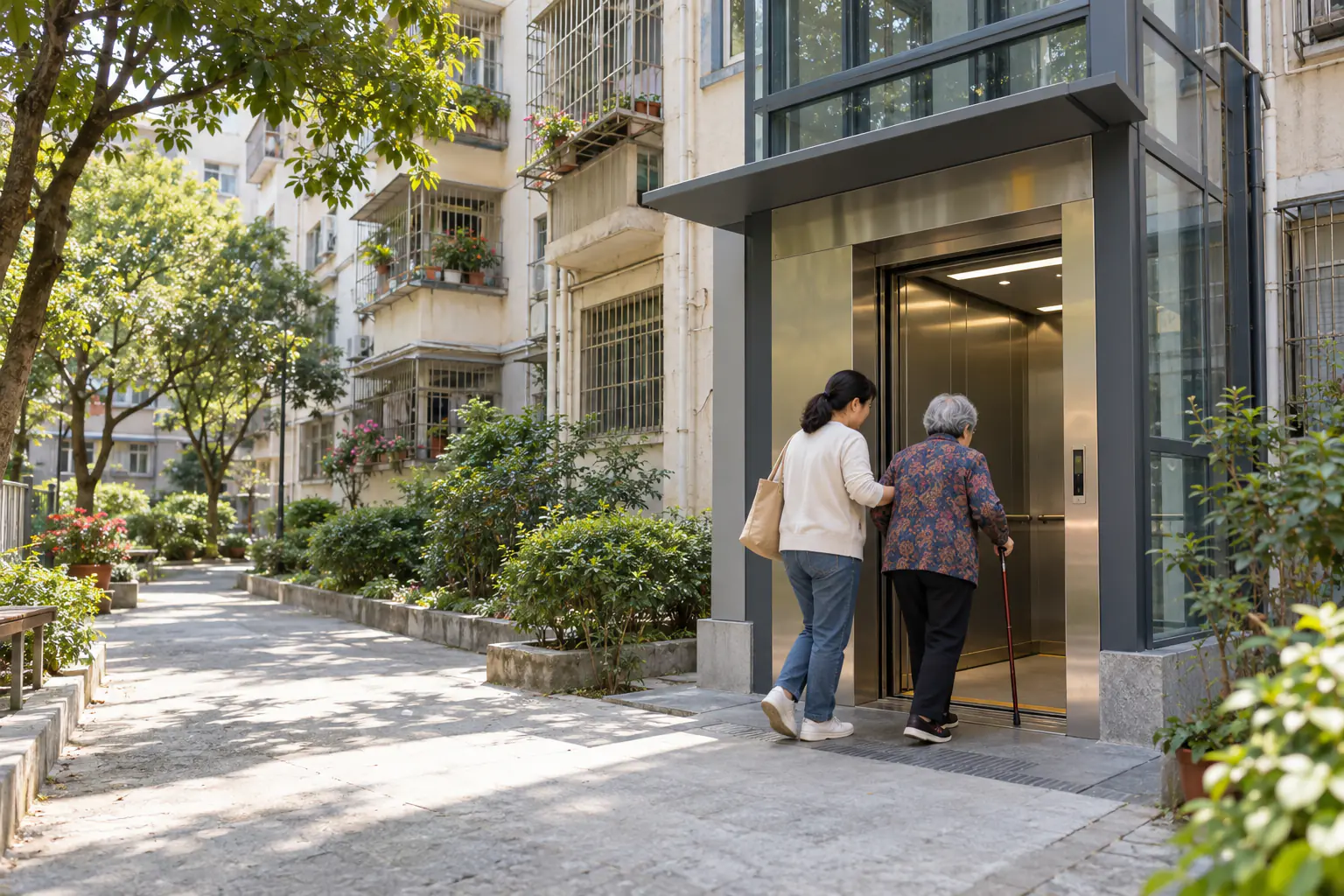
A shared community elevator serves authorized households in the same building. Investment, costs and ongoing service are agreed by the parties under each project's rules.
Explore what matters to you
The Elevbus model
A shared elevator begins with an agreement among the parties. Authorized residents use it, the platform records use and costs, and service providers maintain it. Each responsibility should be clear in the project plan.
↗02Riding the elevator
In a shared elevator project, residents first receive access, then ride and check orders and charges under their building's rules. Visitor access and identification methods depend on the project's setup.
↗Agree on the project before ride rules
Owners and property holders decide together. Building and operating parties provide investment and services as agreed. Residents then use the lift under published access rules.
Every ride can be recorded
The platform records identities and household links, floor rights, pricing, orders, bills and work orders. Data helps verify service but does not replace contracts or legal duties.
Who can use a shared elevator
Sharing means that eligible residents and others authorized by the project use the same lift. Access, reachable floors and charges follow project permissions and published rules. The name Elevbus does not mean the lift is open to the general public, government-run by default or subject to a universal fare.
Which solution fits your community?
Tell us where the project is and its basic conditions so we can discuss the next step.