
Frequently asked questions
These answers cover common issues. Confirm exact terms against the published plan and agreement for your project.
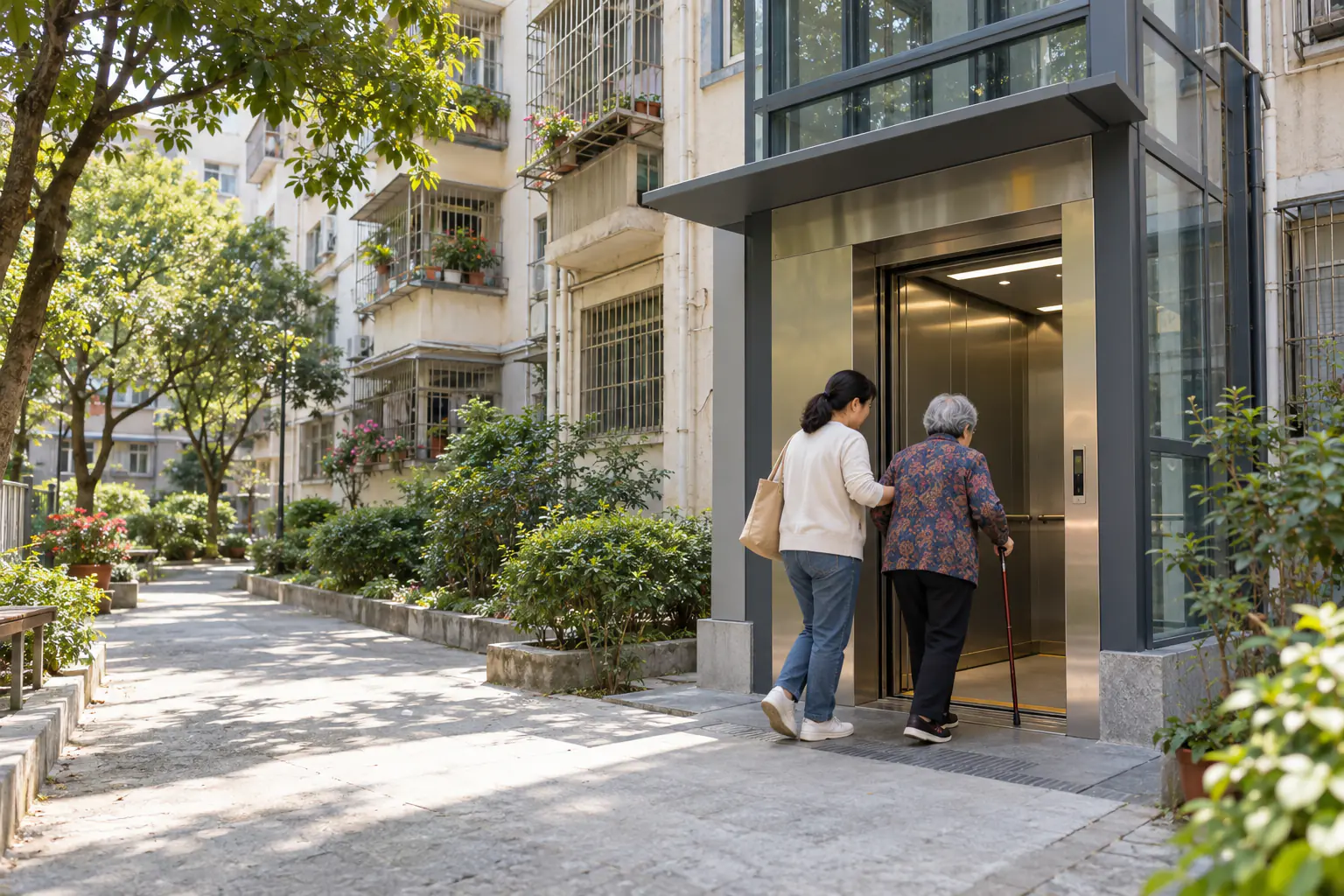
Before a project begins
Owners can prepare the address, floors, households and current elevator details, and say whether they seek installation or replacement. The team then assesses the site and local process.
Costs and ownership
Initial funding, subsidy eligibility, fares, ownership and maintenance duties vary. Put any proposed arrangement in public notices and formal agreements.
After opening
Residents should know access methods, service providers, fault channels and order lookup. Operators should provide the services and cost information agreed for the project.
FAQ
Prices, ownership and service terms depend on the assessment and agreement for each project.
Can every project get a free installation?
No. Some use company investment; others require owner contributions. Assess funding case by case and record it in the agreement.
Does replacement always mean per-ride charges?
No. Pricing and settlement are configured for each project by agreement.
Who maintains the elevator?
The project agreement, service commission and applicable rules identify the responsible party. Platform work orders do not replace on-site performance.
Are returns guaranteed?
No. Income, cost and duration vary, so partners should make independent projections using real project data.
Can anyone ride a shared elevator?
No. Sharing means that eligible residents and other people authorized by the project may use it. The building's rules and agreement determine who may ride, which floors they may reach and any charges. It is not open to the general public.
Which solution fits your community?
Tell us where the project is and its basic conditions so we can discuss the next step.